


Chances are, you aren’t barreling enough in 3bet pots.
In my previous article, I used a database of some of the top high-stakes red line crushers to show that most players should start bluff-raising rivers more often.
Following up on this, I have one more simple 3bet pot exploit to share: barreling more often on the turn with bluffs.
-
Just like with river raises, data shows that most regs do not bet often enough and under-bluff on the turn after cbetting in 3bet pots (B-B).
-
However: this is a key bluffing spot that generates a big over-fold when done properly.
This applies to both In Position and Out of Position strategy as the preflop 3bettor.
Why Bluffing Here Prints
To keep things simple, we’ll focus on just the strategy for the IP PFR. This same concept applies to OOP as well however.
Mass data shows that most regs under-barrel on the turn by around 6% (Solver 58, Regs 52). By contrast, the best red line regs barrel much closer to the solver frequency.
-
This might not seem like a huge difference, but this 6% population under-barrel is one of the bigger deviations regs make in poker.
-
Rule of thumb: 5%+ deviations are BIG, (many pro exploits are built around 2-4% frq. deviations)
Bluffing here is amazing:
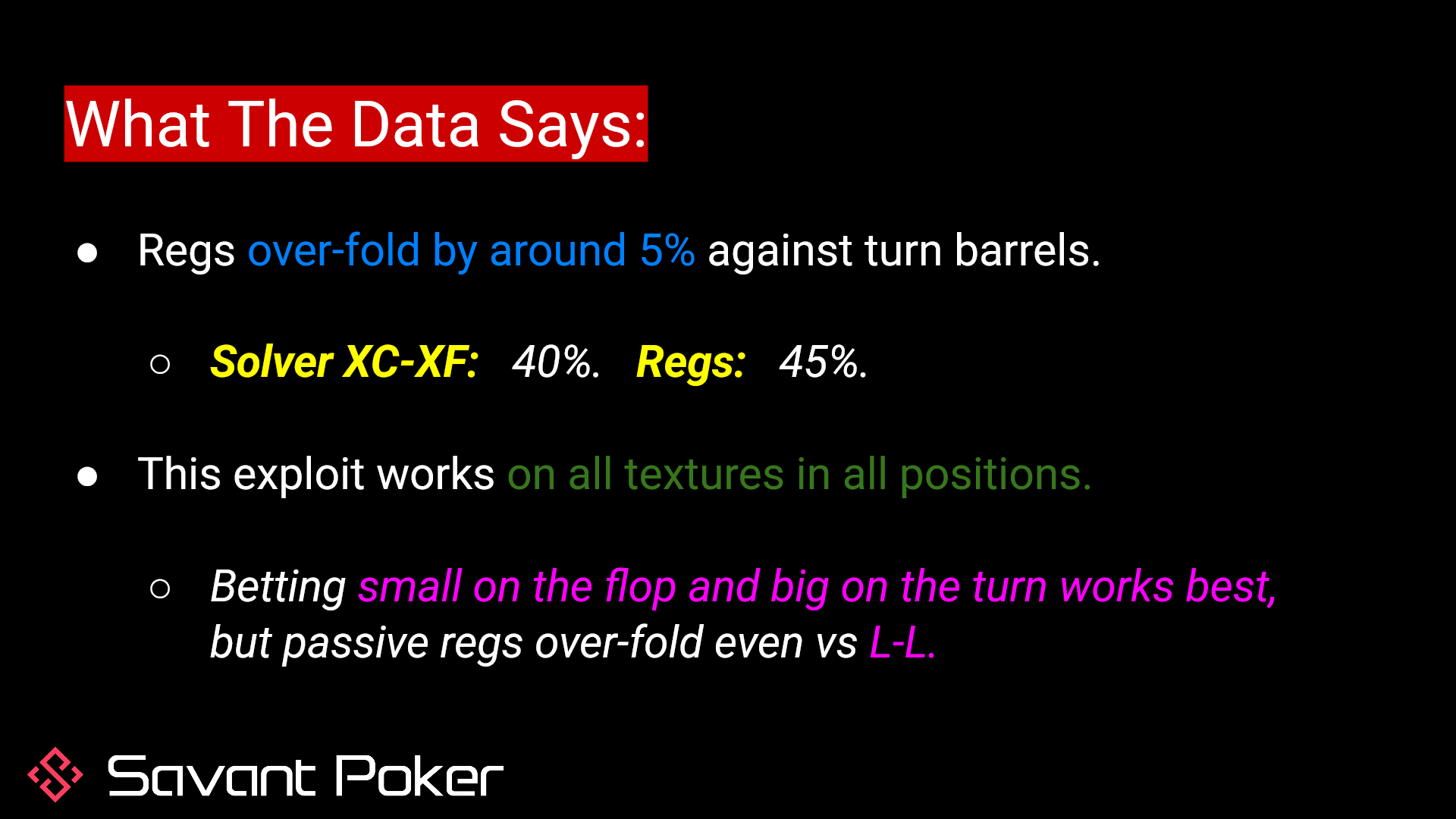
The Big Picture: almost all reg player types over-fold, in almost all situations.
Likely, this is for two reasons:
-
Regs do not expect players to bluff often enough here, which causes them to over-fold with weak hands that solver bluff-catches with.
-
Regs have a low defending threshold which they might miss in late positions, like in BB v SB. The over-fold there is usually bigger.
But, Be Careful…
You cannot bluff on every single board 100% of the time. Far from it.
A big reason why regs over-fold is because they anticipate you to under-bluff. Change your table image by bluffing often enough, and the exploit stops working.
For example, consider HJ’s calling strategy against CO on A♦ 6♥ 5♥ 8♥. In this example, CO bet small (30%) on the flop and medium (50%) on the turn:
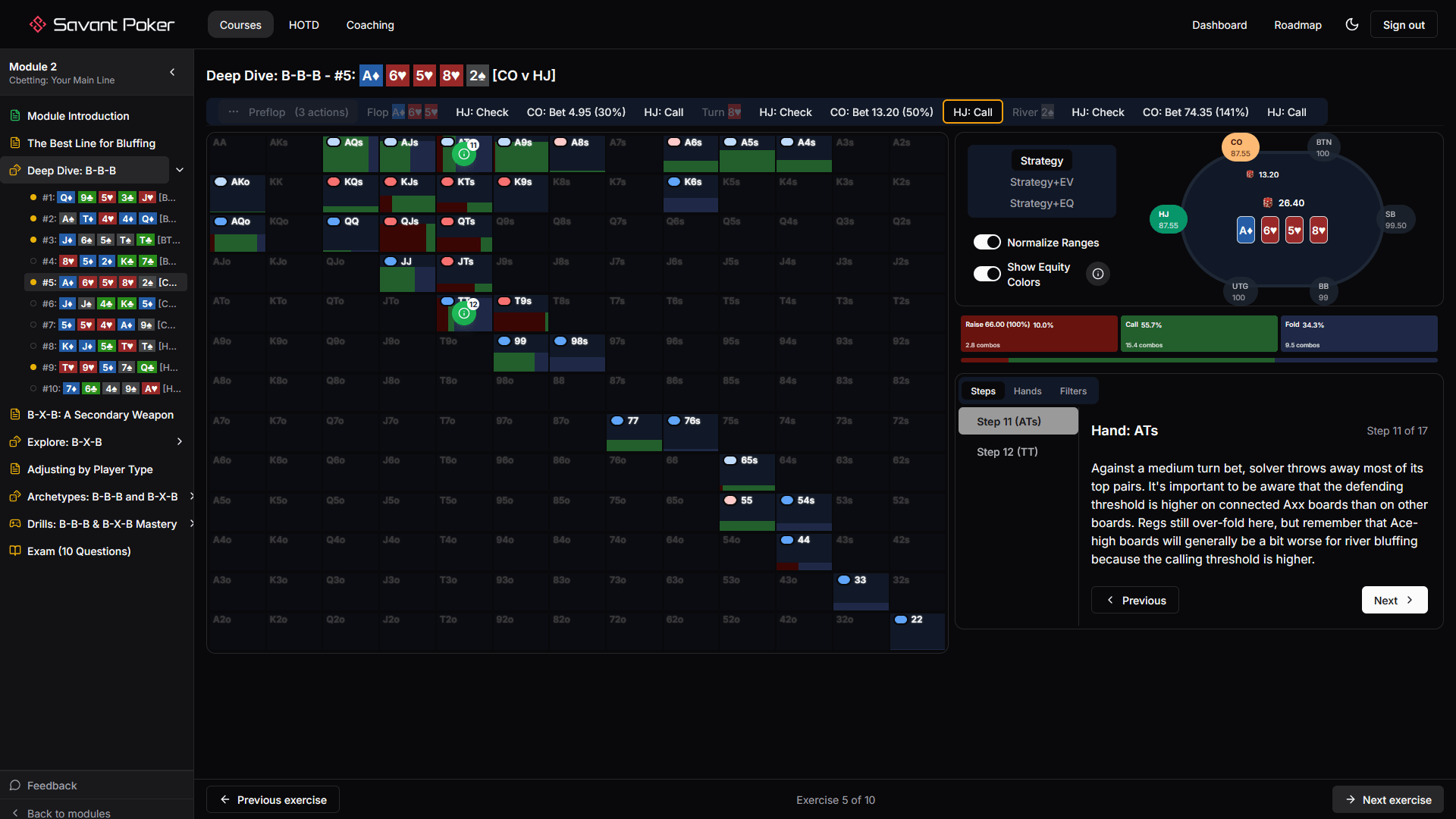
As you can see, solver mixes with many of its top pairs like AJ and AT.
-
Despite the high defending threshold, data shows that the average reg will over-fold in this spot.
-
Bluffing on the river in B-B-B is also generally effective; although worse on this specific texture and in early positions due to range tightness (villains range contains more strong hands that players are less likely to fold.)
Key Point: Bluffing in this spot won’t be effective if you have a highly aggro table image.
Compare that to a different board, J♦ 6♠ 5♠ T♠ played BTN v CO. Here, BTN bet 50% on the flop and 30% on the turn:
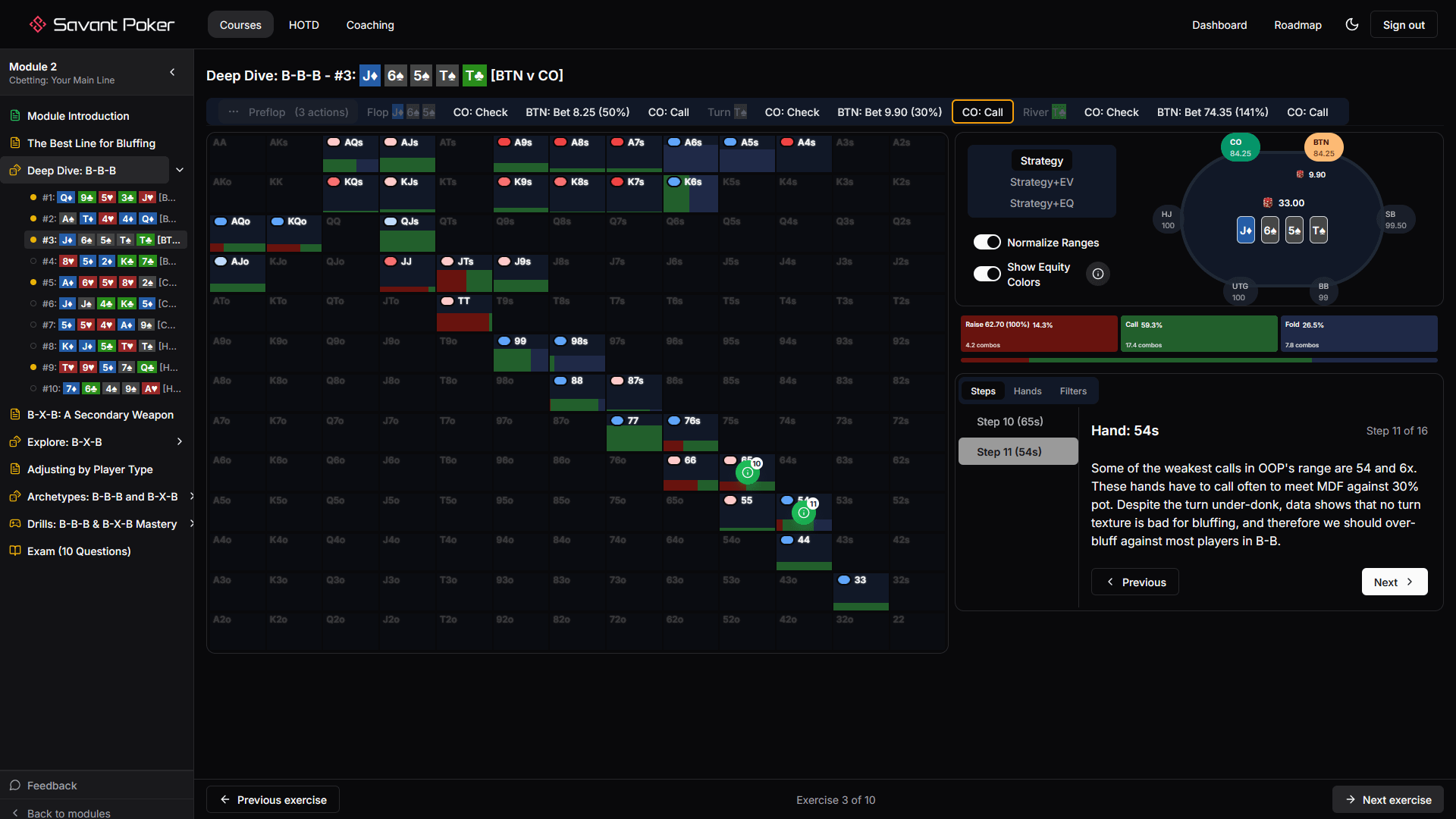
CO has a much lower defending threshold, never folding top/second pairs and instead mixing call with some weak pairs like K6 and 54.
-
We know that most players call pretty tight in 3bet pots: so bluffing here is much better.
-
Especially if you’re worried about your table image becoming too aggressive long-term, focus more on bluffing on non-Ace-high boards in late positions.
OOP needs to call with more weak hands in these spots, which are easier for players to miss, even if they suspect that they should call more against you.
Big Takeaways
Starting bluffing more in 3bet pots. A lot more.
-
Bluff much more against passive regs, but don’t be afraid to slow down against station-y players, especially if your table image is too aggro.
-
Remember that according to texture and player type analysis, most players will over-fold in almost all turn spots, even from early positions.
-
Solver’s turn barreling frequency is 58%: barreling with bluffs 45% of the time on average. Aim to get your frequency close to/above this amount instead of below.
So what do you think? Are you aware of this exploit? Or do you feel like you get called too often with weak hands whenever you try to pull it off?
Curious to hear what you guys think 🙂
– Gleb