Yesterday I made a strategy post about defending vs check-raises, and you guys seemed to like it! So I’ll continue writing short strategy articles :)
Today, let’s talk about one of the most misunderstood cbetting spots: SRP IP PFR, on high boards like [Kd] [Td] [6c]
Most players make the same decision here: they rangebet small. It’s simple, clean, and “only loses a little EV” according to the solver.
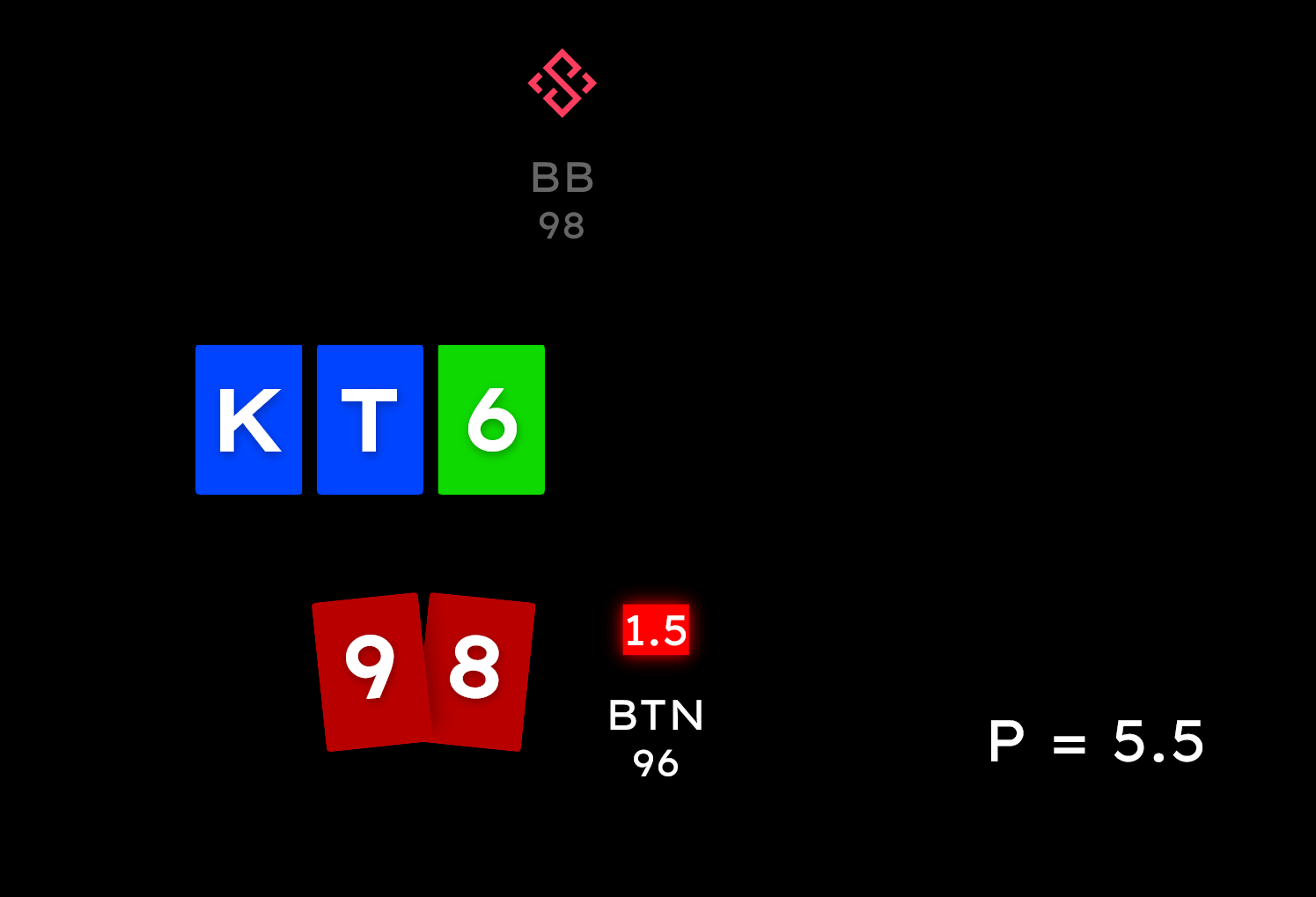
But Here’s the Truth: that tiny EV loss on the flop ripples into huge missed opportunities on later streets. And this happens for two reasons:
1. You give up EV with your strongest hands.
On K♦ T♦ 6♣, your strongest hands (KQ+) actually lose EV when you use a smaller size with your range. These hands naturally want to bet big, and gain EV in a “polar” solver strategy.
In Practice: As an exploit, it makes even more sense to bet your strongest hands for a large size. Mass data (MDA) reveals that regs over-fold more on turns/rivers when you bet small on the flop, and call much more often when you use a larger flop bet, like an overbet.
According to the data, there’s a huge cost in only betting small with hands like T♣ T♠ on this flop. Especially for live poker, where balance rarely matters, this is the number 1 mistake I see in hands posted here and in r/Poker_Theory.
But rangebetting has a second cost…
2. You nerf your ability to bluff later.
Let’s say you cbet small with air, and get called. You have two bluffing lines left: B-B-B and B-X-B.
In Practice: Per MDA, only the B-X-B line generates a big over-fold. But especially online, if you cbet all of your air on the flop, it will be too obvious if you always bluff in B-X-B. You just have too much air if you rangebet!
By playing a polar strategy on the flop (instead of rangebetting), you now have X-B-B and X-X-B bluffing options. Both of these are fantastic bluffing lines. You gain two new fantastic lines for bluffing!
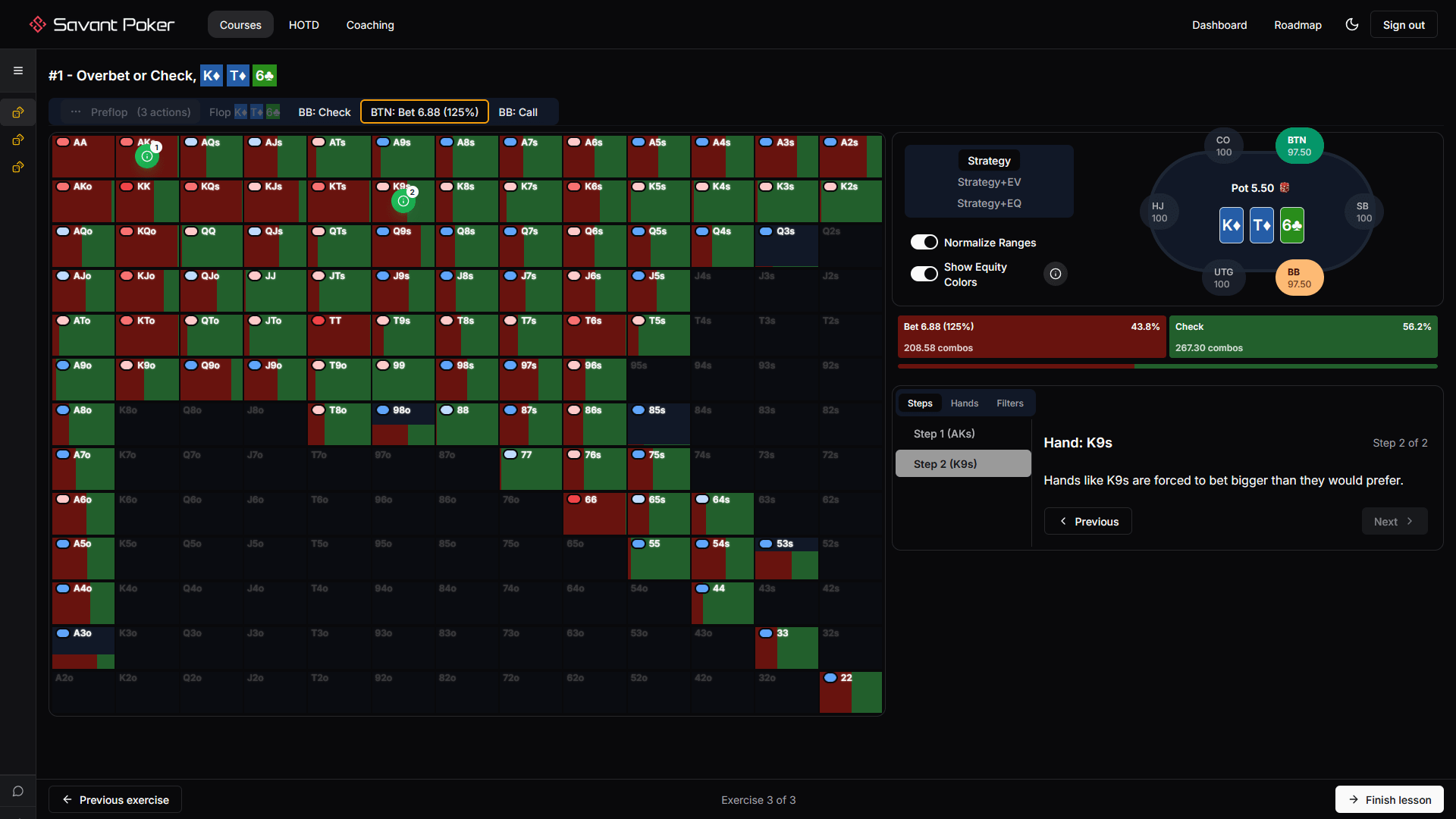
On high boards like K♦ T♦ 6♣, solver prefers a polar cbet strategy, so it’s also the more theory-approved strategy:
Solver prefers to overbet on double-broadway boards, primarily from late positions like BTN vs BB and CO vs BB.
But Here’s the Problem:
Playing “overbet-or-check” on the flop also has serious drawbacks.
-
It forces “medium-strength” hands like K♠ 8♠ either bet big or check. Optimally, this hand would like to bet small because that represents its strength.
-
It forces weaker pairs like Tx, 6x, and pocket pairs to check.
That Second Point is Disastrous: Regs tend to bet too often on the turn after you check on the flop. Weak pairs suffer the most from this turn overstab.
By contrast, if you bet small on the flop and check on the turn, players tend to bet too infrequently in XC-X-B. This means cbetting small with pocket pairs is optimal: they dodge the X-B overstab, and can just check on the turn to get to showdown super easily.
Put both pros and cons for each strategy together, and you’re left with an optimal exploitative flop cbet strategy that looks like this:
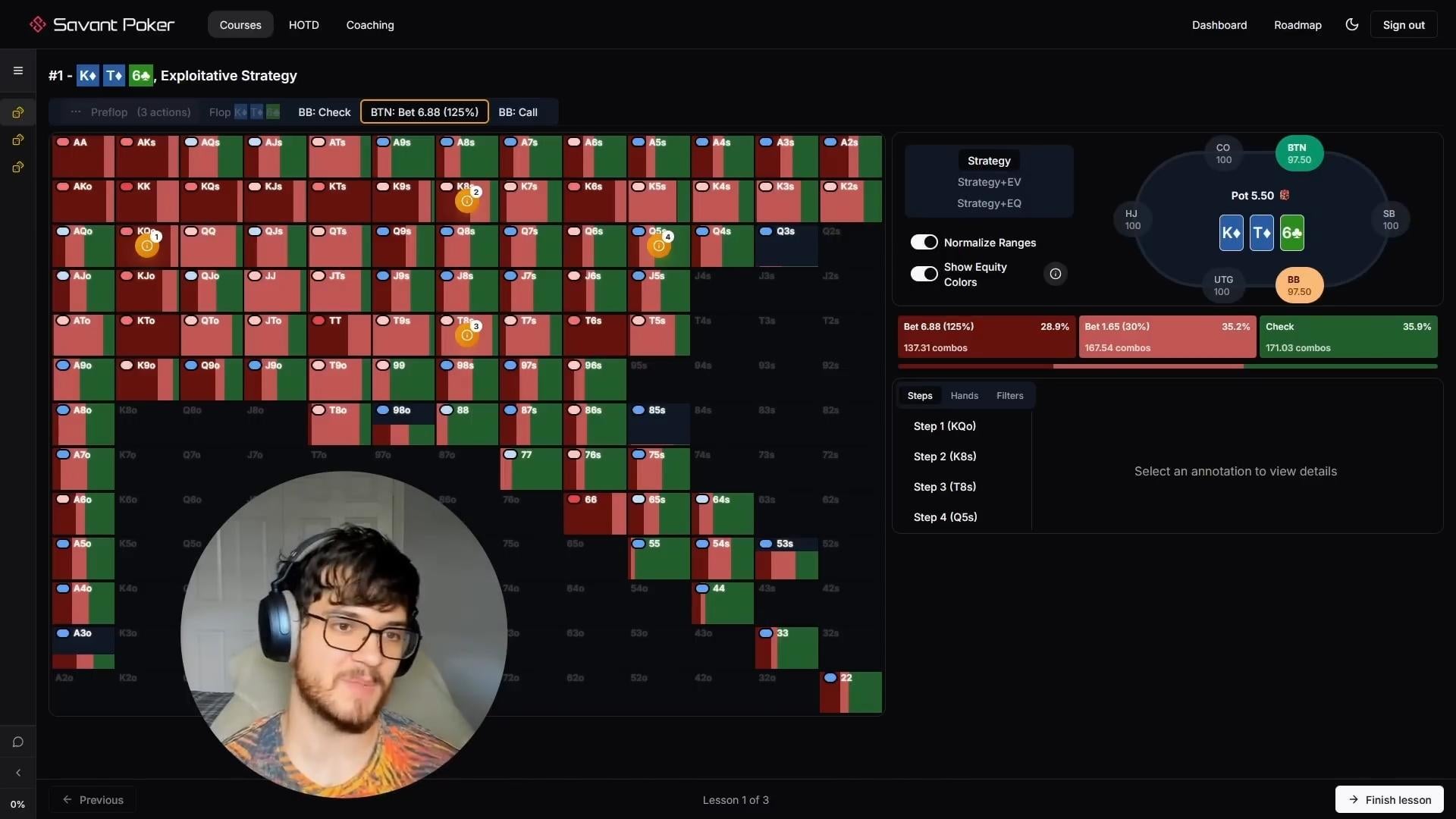
Strongest hands bet big to get max value, weak pairs bet small, and bluffs check a bit more often than what’s balanced in order to take the optimal X-B-B and X-X-B bluffing spots.
This flop cbet strategy crushes in live poker. There, you don’t have to worry too much about playing balanced, so it’s fine to play multiple sizes on the flop and just “roughly” balance them.
But online regs usually prefer to use just one flop cbet size for simplicity. And in that case, I recommend using a small rangebet vs weaker regs, and play “overbet-or-check” against stronger regs.
If You Want to Dive Deeper:
I have a free youtube video that explains these concepts a bit more in-depth here: https://youtu.be/2Wkrbz9Q2BI
I also created a free mini-course on my interactive coaching app Savant Poker: https://app.savantpoker.com/courses/misplayed-flop-texture
In that app, you can practice these concepts, which also explains how to play tricky turns and rivers after overbetting on the flop. Check it out for yourself! :)
Note to mods: Teaching poker is my full-time job and allowing me to post my links here will allow me to share tons more free high-quality content here. All content takes hours of research and assembly. I think the resources I linked are extremely helpful. But if it’s too much self-promo, I 100% understand, just comment or DM me and I’ll edit it out.